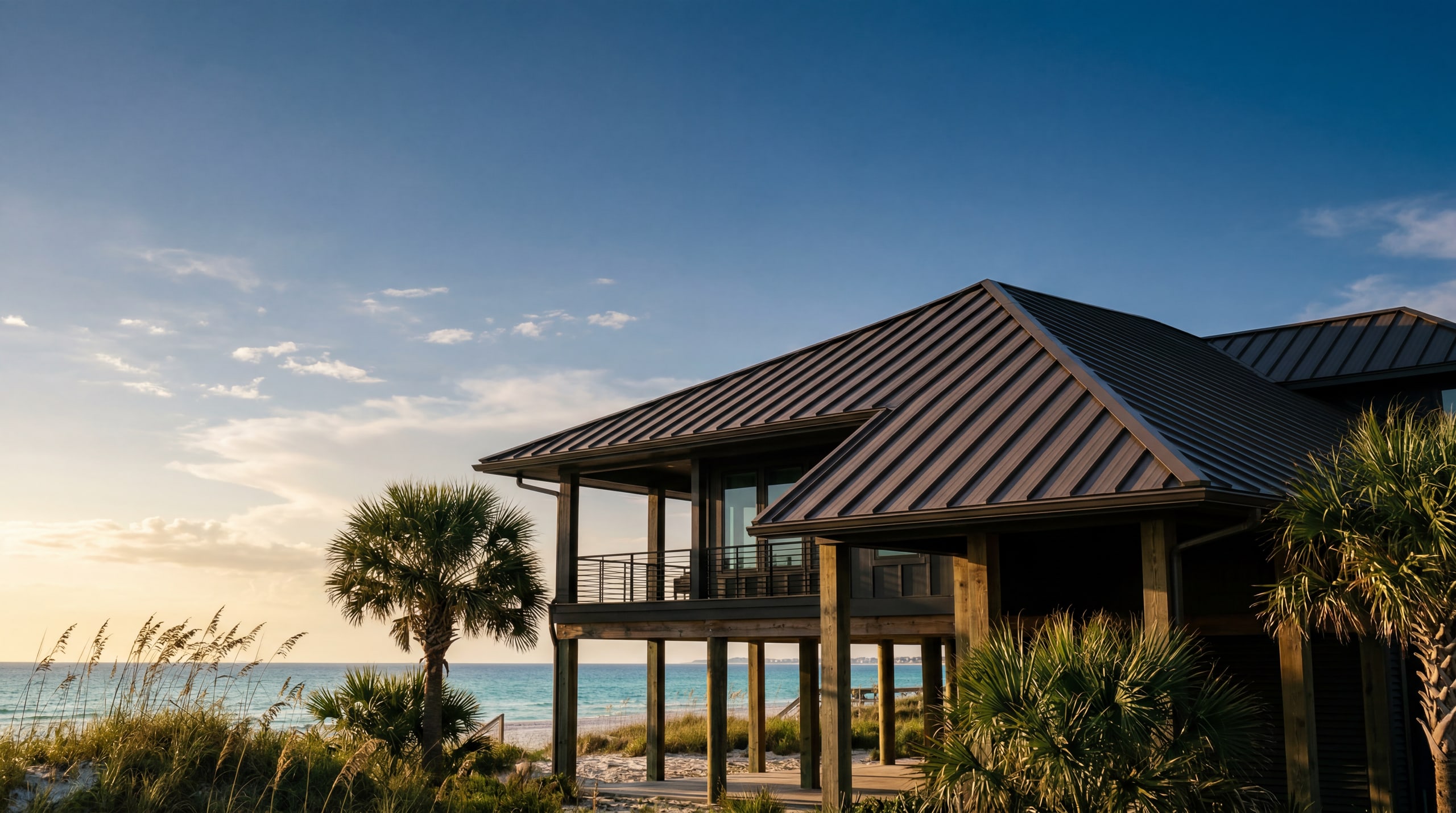
Metal Roofing
Metal that lives on the coast.
Standing-seam and exposed-fastener panels installed for the wind, sun, and salt we actually see in Baldwin and Mobile counties.
- Hurricane-zone rated
- Salt-air-rated coatings
- Owner-led install
- 40-50 year lifespan
What homeowners feel
Four reasons coastal homeowners go metal.
Metal is not the right answer for every roof. But for a stretch of coastal homes from Daphne to Orange Beach, it's the smartest long-term decision a homeowner can make.
Tired of replacing shingles
Two shingle roofs in twenty years adds up. Metal is the longer-term answer for many Gulf Coast homes.
Insurance discount for metal
Some carriers offer premium discounts for wind-rated metal. Worth a call to your agent.
Modern coastal architecture
New build or remodel asking for a clean metal look — standing seam, hidden fasteners, color-matched trim.
Outbuilding, porch, or accent roof
Garages, shops, porches, and accent dormers often live longer in metal than shingle.
Coastal benefits
Why metal makes sense on the Gulf Coast.
The same wind and salt that beat up shingles are what metal was designed for. Here is the engineering reason.
Hurricane-zone fasteners
Concealed clip system. The fasteners do not penetrate the panel face, so there is no rubber washer to fail. Uplift ratings to 140+ mph with proper spacing.
Salt-air-rated coatings
Kynar 500 / PVDF finish. Holds color and resists chalking in a coastal environment. Standard color line includes coastal-friendly grays, charcoals, and Gulf greens.
Lifespan beyond shingles
Forty to fifty years of service life under coastal conditions, where shingles average twenty.
Insurance treatment
Some carriers offer wind-mitigation discounts for standing-seam metal in Baldwin and Mobile counties.
What Optimum installs
Two systems, both coastal-spec.
Standing seam is the premium choice for homes. R-Panel is the right call for garages, workshops, barns, and accessory structures. We'll tell you which one fits your project.
| Spec | Standing seam | R-Panel |
|---|---|---|
| Gauge | 24-gauge steel | 26-gauge steel |
| Panel width | 16" or 18" | 36" |
| Fastener system | Concealed clip | Exposed screw + EPDM washer |
| Finish | Kynar 500 / PVDF | Kynar 500 or SMP |
| Wind rating | 140+ mph w/ clips | Lower; rated for outbuildings |
| Best use | Primary residence | Garage / barn / accessory |
| Service life | 40–50 years | 30–40 years |
How it goes
From measurement to mechanical seam.
Step 1
Roof check and measurement
We pull accurate measurements and confirm pitch, ventilation, and detail conditions.
Step 2
Material and color
We walk through standing-seam vs. exposed-fastener, gauge, and color options.
Step 3
Order and stage
Panels are made to length to minimize seams. We coordinate the delivery and the dump trailer.
Step 4
Tear-off and underlayment
Full tear-off, deck inspection, high-temp synthetic underlayment, ice-and-water at eaves and valleys.
Step 5
Panel install
Panels rolled out, fastened to manufacturer spec, with proper trim at ridges, eaves, valleys, and walls.
Step 6
Clean-up and walk
Magnet sweep, debris haul, and a final walk before we close the job.
Materials we install
Panels, fasteners, finishes.
Standing-seam panels
24-gauge or 26-gauge concealed-fastener panels — McElroy or similar coastal-grade lines.
Exposed-fastener R-panel and 5V-crimp
Affordable, durable panels for outbuildings, porches, and budget-conscious main roofs.
Galvalume substrate with Kynar 500 / PVDF finish
Coastal-grade substrate and finish coating built for salt-air exposure.
Stainless / hot-dipped galvanized fasteners
EPDM-washer fasteners sized for the panel and the wind zone.
High-temp synthetic underlayment
Rated for metal panel temperatures plus self-adhered ice-and-water at eaves and valleys.
Manufacturer partnership status flagged until our McElroy or equivalent account is confirmed.
Warranty
Metal roof warranty stack.
Standing-seam systems typically carry a 30+ year paint / 40+ year substrate manufacturer warranty plus our year workmanship warranty.
Warranty paperwork is registered with the manufacturer at completion and handed to you in the project packet.
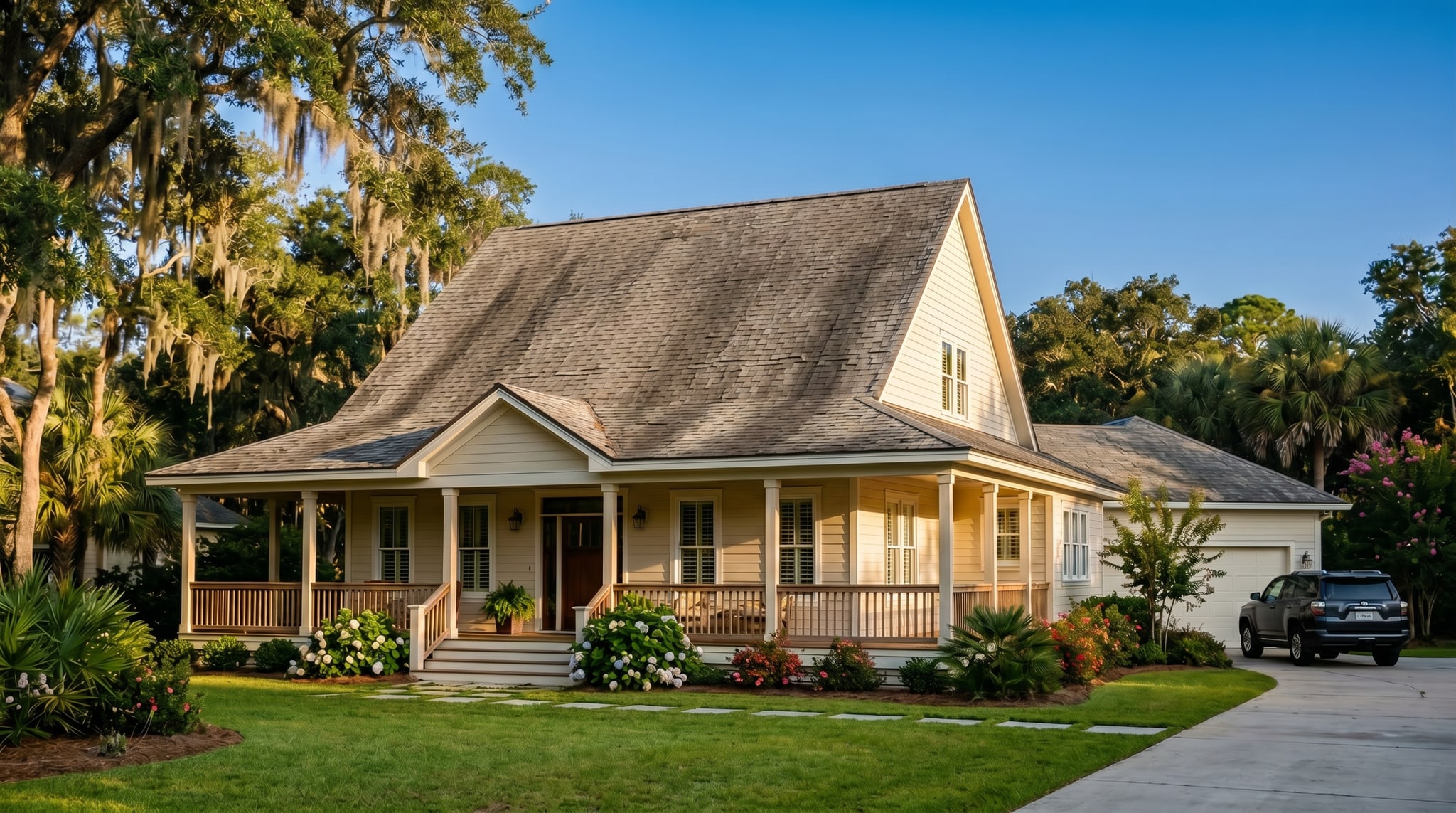
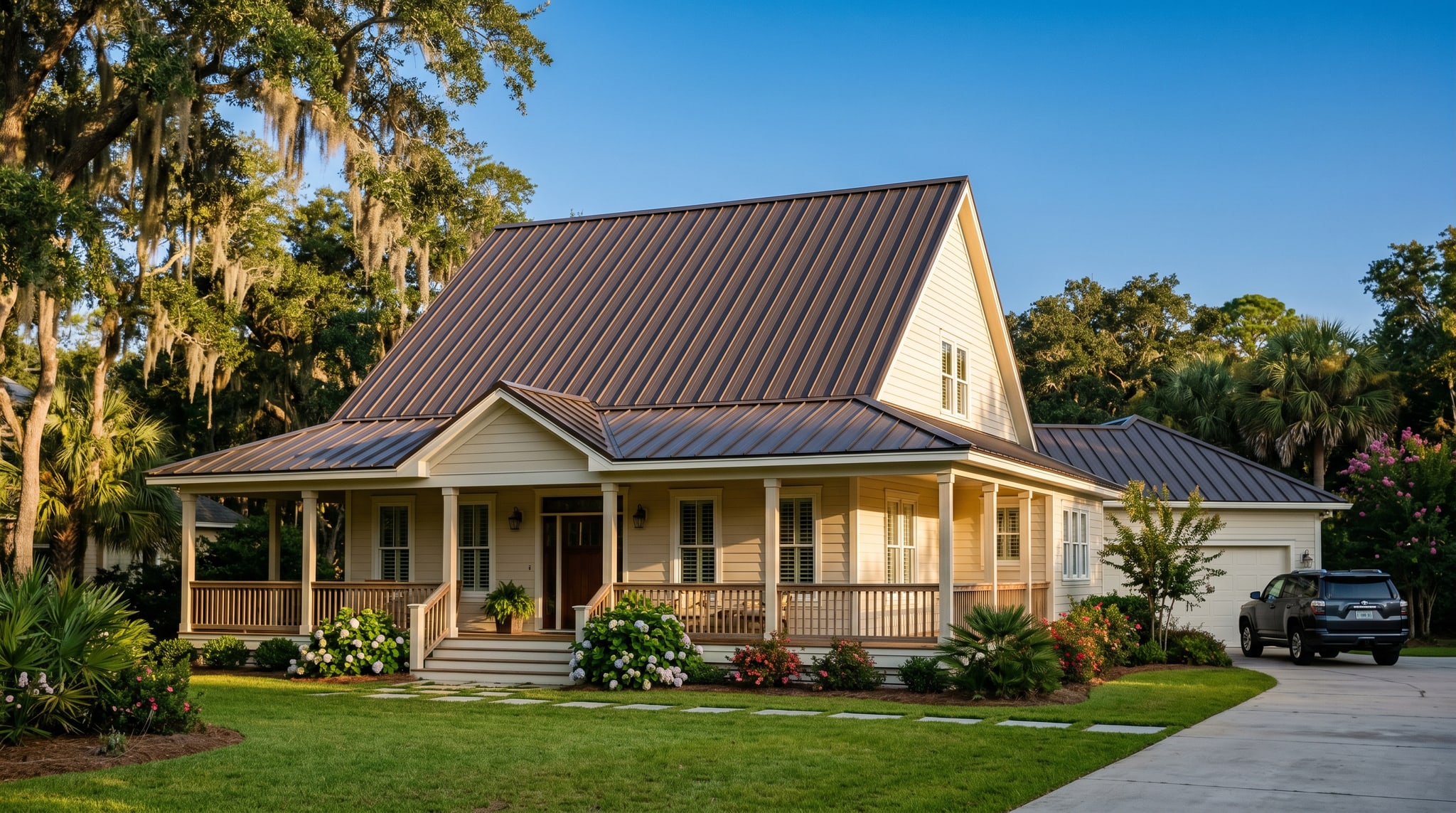
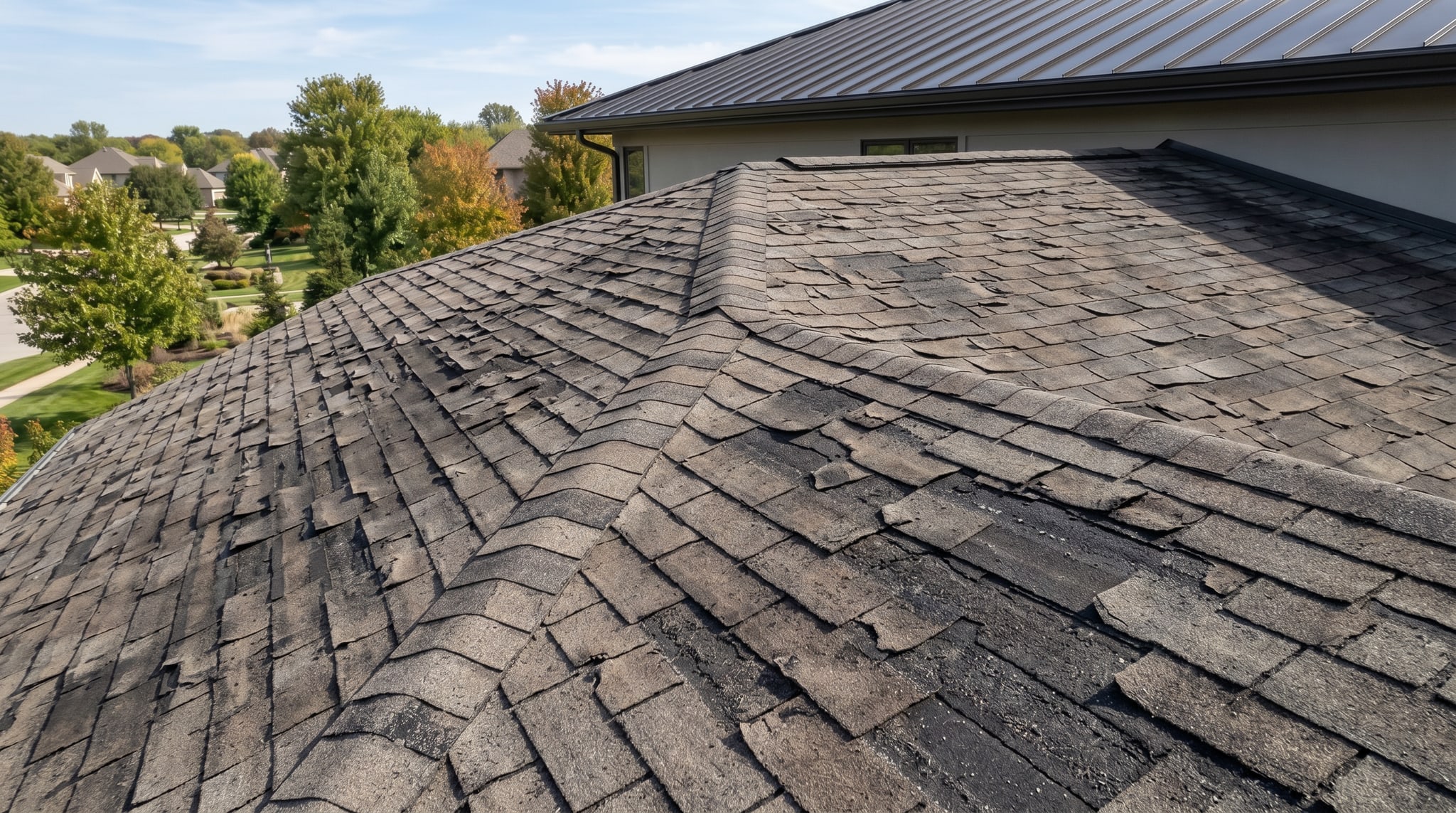
Photo proof
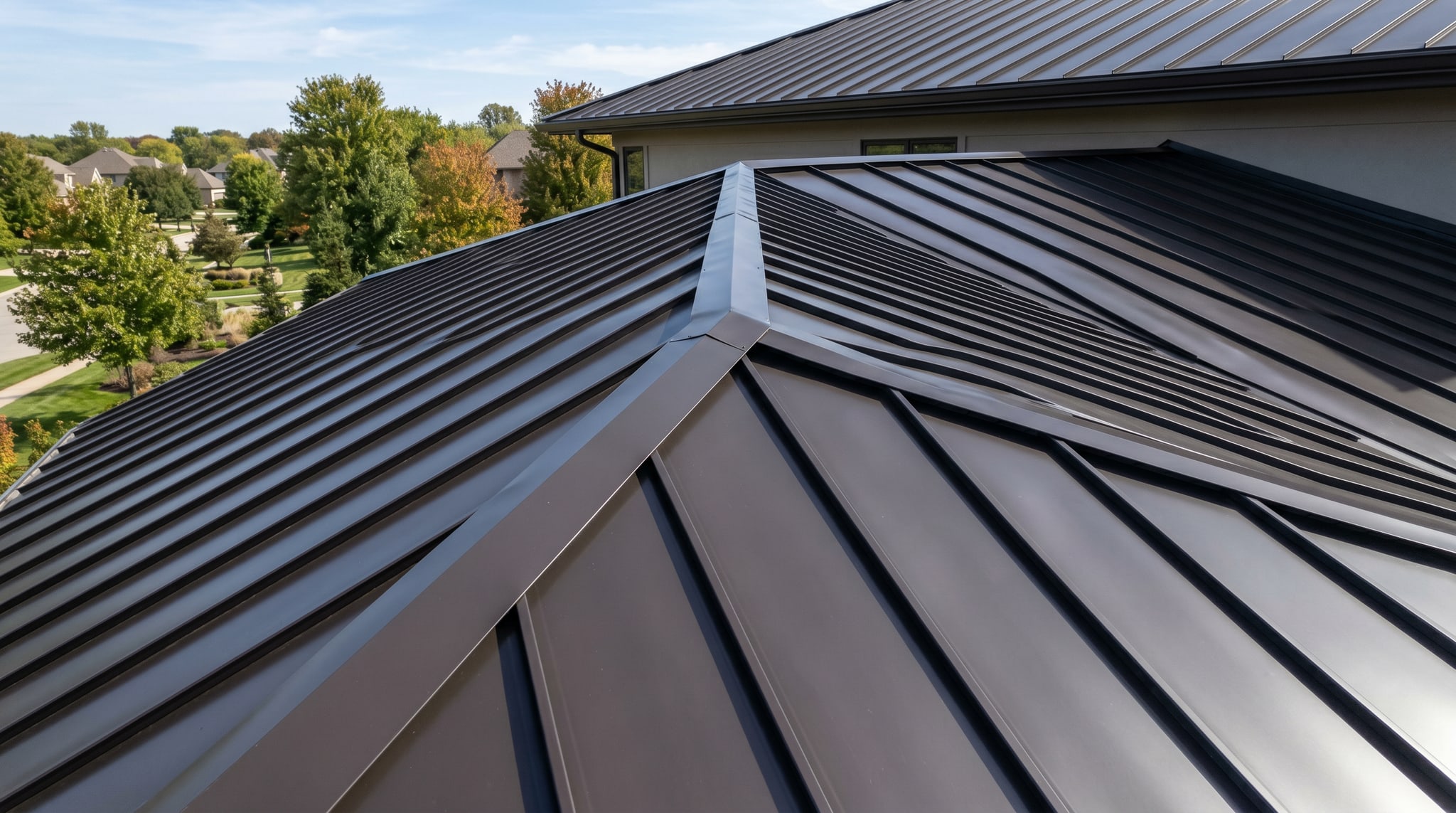
Metal roofs we've installed.
Deep dive
Standing-seam vs exposed-fastener — the long version.
Both are metal. They behave very differently over a 30-year ownership horizon. Here's what changes when you pick one over the other on a Gulf Coast home.
Standing-seam
Adjacent panels lock together along a raised seam, mechanically crimped or snap-fit. Fasteners hide inside the seam, attached to the deck through hidden clips that allow the panel to expand and contract with temperature. No rubber washers exposed to UV. No screw heads to rust at the surface.
Wind performance. Properly installed 24-gauge standing-seam routinely tests at 140 mph wind uplift or higher . Among the most wind-resistant residential roof systems made.
Service life. 40 to 50 years typical . Galvalume substrate (zinc-aluminum-coated steel) plus Kynar 500 / PVDF paint system carries 30 to 50 year finish warranties.
Best for. Primary residence, especially within a mile or two of the water. Long-hold homeowners. Any home where wind-mitigation insurance discount is available and worth pursuing.
Exposed-fastener (R-Panel / 5V-crimp)
Screws penetrate the panel face with an EPDM rubber washer for the seal. Lower cost than standing-seam, faster to install, simpler material list. The limiting factor is the rubber washer — it ages in UV and needs attention every 15 to 20 years.
Wind performance. Lower than standing-seam. Fine for outbuildings and structures with shorter wind fetches; not what we'd specify on a primary residence within a few miles of the water .
Service life. 30 to 40 years on the panel itself . EPDM washer lifecycle is shorter — plan to address screws and washers before year 20.
Best for. Garages, workshops, pole barns, accessory structures, and budget-conscious main roofs north of I-10 where wind exposure is lower.
How we recommend
For a primary residence on the Gulf Coast, we recommend standing-seam in almost every case. The longer service life, higher wind rating, and absence of exposed fasteners more than justify the cost difference over the life of the roof.
For detached structures — a workshop in Loxley, a pole barn in Bay Minette, a pool house in Daphne — exposed-fastener panels are the smart financial choice. We install both and we'll tell you which one fits your specific project.
Common questions
Questions about metal roofing
- Standing-seam hides the fasteners and lasts longer. Exposed-fastener is more affordable and great for outbuildings and porches.
- Not when installed over a proper deck and underlayment. The sound difference inside the home is minor.
- A properly installed metal roof is one of the most wind-resistant systems available. Install detail matters as much as the panel itself.
- Light-colored Kynar finishes reflect a lot of heat. Real savings depend on attic ventilation and insulation.
- A quality coastal install commonly performs 40+ years. The finish warranty often runs 35–50 years.
- Yes. We install metal on traditional gable, hip, and low-slope coastal homes.
- Many Gulf Coast carriers discount wind-rated metal. Check with your agent — we can provide the spec sheet.
- Metal typically runs higher up front and lower over the life of the home. We show both numbers on the proposal.
Related services
What else we install.
Roof Replacement
Full tear-off and re-roof with Gulf Coast wind-rated systems and clean job-site practice.
Learn moreRoof Installation
New-construction and addition installs built to the architect's plan and Gulf Coast wind code.
Learn moreRoof Repair
Targeted repairs for leaks, missing shingles, and storm hits across Baldwin and Mobile counties.
Learn moreWhere we work
Coastal Alabama service area.
Stapleton, Bay Minette, Loxley, Robertsdale, Foley, Daphne, Spanish Fort, Fairhope, Gulf Shores, Orange Beach, Mobile
Metal roof quote
Ready for the last roof you'll buy?
Send us your address or a photo of the roof. Jon Jon or Justin will call you back within 1 business hour with a real number and a real schedule.