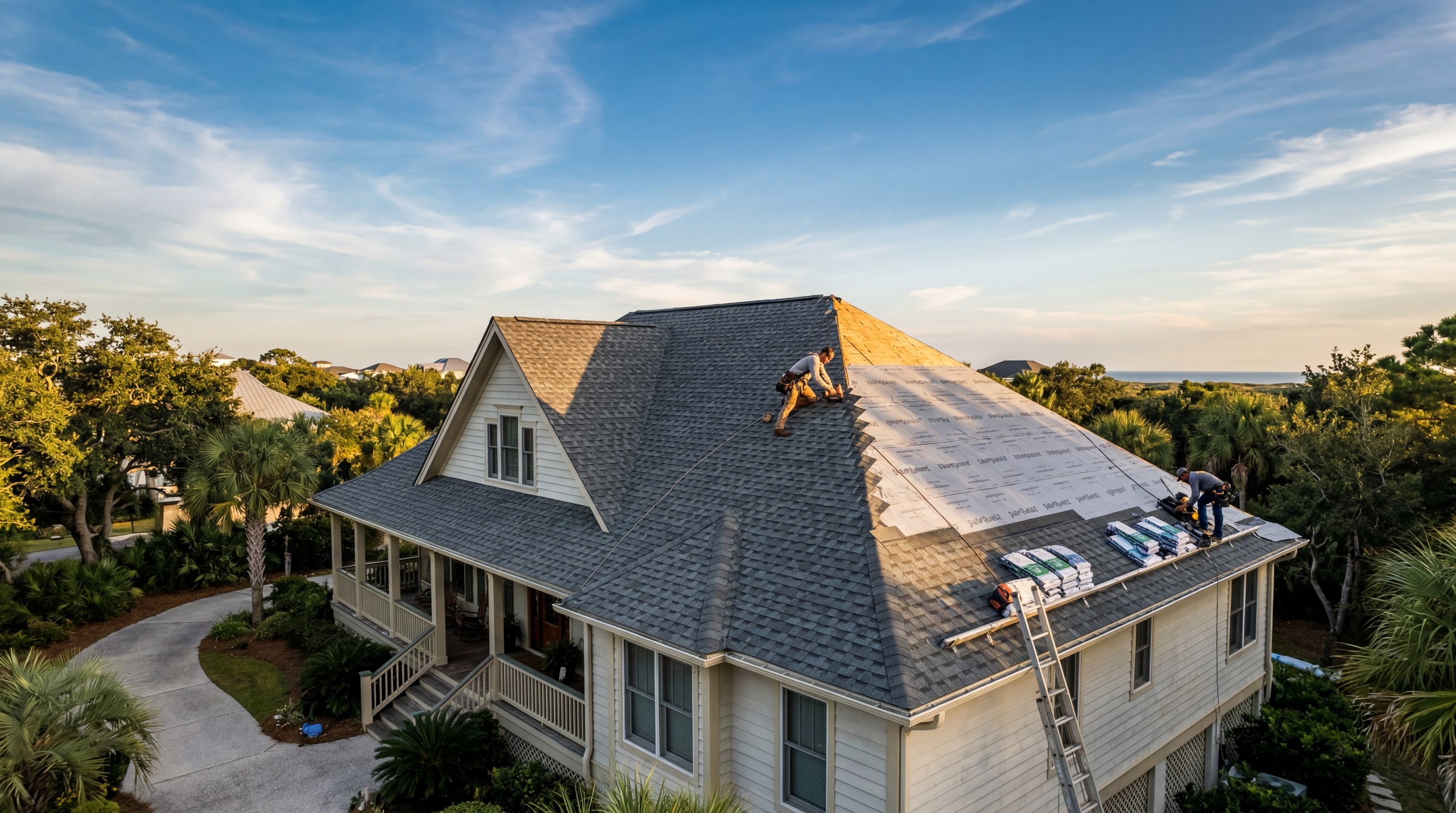
Roof Replacement
A roof you do not have to think about.
Full tear-off, new underlayment, new flashing, new shingles or metal — installed for the wind we actually see on the coast.
- Owner on site
- GAF / OC / CertainTeed
- Coastal-grade fasteners
- Financing available
What homeowners feel
Why folks call us about a full replacement.
A replacement is a serious decision. Most homeowners we meet have been thinking about it for two or three seasons before they call. Here's what usually pushes the call.
Aged-out roof
18+ years old or on its second layer. Repairs are not catching up with the failures anymore.
Repeated repairs every season
Same areas keep coming back. Every fix buys less time than the last one.
Visible sagging or daylight
Sagging slopes, soft decking, or daylight in the attic mean the system is past saving.
Selling the home
Inspector will flag the roof. Cleanest path forward is a fresh system with a transferable warranty.
What Optimum does
A full roof system, not a shingle swap.
A real replacement starts at the deck and ends at the ridge. We pull the old roof down to the sheathing, replace any rotten deck, lay synthetic underlayment, run self-adhered ice-and-water shield at valleys and penetrations, set drip edge in the right order, and use coastal-rated fasteners through the field. Then we ridge-vent it so your attic stops cooking your shingles from below.
Tear-off to deck
Old material removed. Deck inspected and replaced where soft.
Underlayment + shield
Synthetic underlayment plus ice-and-water shield at the high-risk zones.
Coastal-grade fasteners
Ring-shank nails on the proper pattern for our wind zone.
Ventilation
Ridge vent, soffit balance, attic airflow checked.
Shingle vs. metal
Two good roofs. Different reasons.
Most replacements we do are architectural shingle. Standing-seam metal is the right call for some homes — especially closer to the water. Here's how they actually compare.
| Spec | Architectural shingle | Standing-seam metal |
|---|---|---|
| Typical lifespan | 25–30 years | 40–50 years |
| Wind rating | 130 mph (HDZ) | 140+ mph w/ clips |
| Coastal salt air | Algae-resistant lines hold up well | Kynar 500 finish rated for coastal |
| Hail resistance | Class 3 / Class 4 options | Dents but rarely fails |
| Look | Traditional, matches neighborhood | Modern, low-profile, premium |
| Up-front cost | $ — lower | $$ — higher |
| Insurance pref. | Most carriers neutral | Some carriers discount |
| Financing | Available | Available |
How it goes
From your free roof check to your warranty packet.
Step 1
Free roof check
We climb the roof, document condition, and recommend repair or replace honestly.
Step 2
System and material choice
We walk through shingle vs. metal, color, warranty length, and price — no pressure.
Step 3
Schedule and materials drop
Materials arrive a day or two before. Driveway is protected, plants are covered.
Step 4
Tear-off and deck check
We tear off down to the deck. Any soft wood gets replaced before new material goes on.
Step 5
Install
Underlayment, flashing, valley metal, shingles or panels, ridge — built to the manufacturer spec.
Step 6
Clean-up and final walk
Magnet sweep for nails, debris hauled the same day, final walk with you on the ground.
Materials we install
Manufacturer systems we use most.
Architectural asphalt shingles
GAF, Owens Corning, or CertainTeed lines — wind-rated and color-matched to the neighborhood.
Standing-seam or exposed-fastener metal
McElroy or similar coastal-grade panels for homes that warrant metal.
Synthetic underlayment + ice-and-water
Self-adhered membrane at eaves and valleys; synthetic underlayment across the field.
Galvalume drip edge and valley metal
Color-matched edge metal and closed valleys built for Gulf Coast rainfall.
Ridge and bath vents
Properly balanced ridge intake/exhaust ventilation, sized to attic volume.
Brand and certification status flagged until our manufacturer accounts are confirmed.
Financing
Spread the cost without playing games.
We work with Hearth / GreenSky / Service Finance so qualified homeowners can finance their replacement. Same crew, same price, just a monthly payment instead of a one-time check. Ask for the financing one-pager when we come out.
Warranty
Two warranties on every replacement.
Your roof carries the manufacturer's shingle or metal warranty (GAF / Owens Corning / CertainTeed) plus our year workmanship warranty. Both transfer to the next owner if you sell.
We hand you a warranty packet on the day of final inspection — paper copy and digital — so you have it the day you need it.
Photo proof
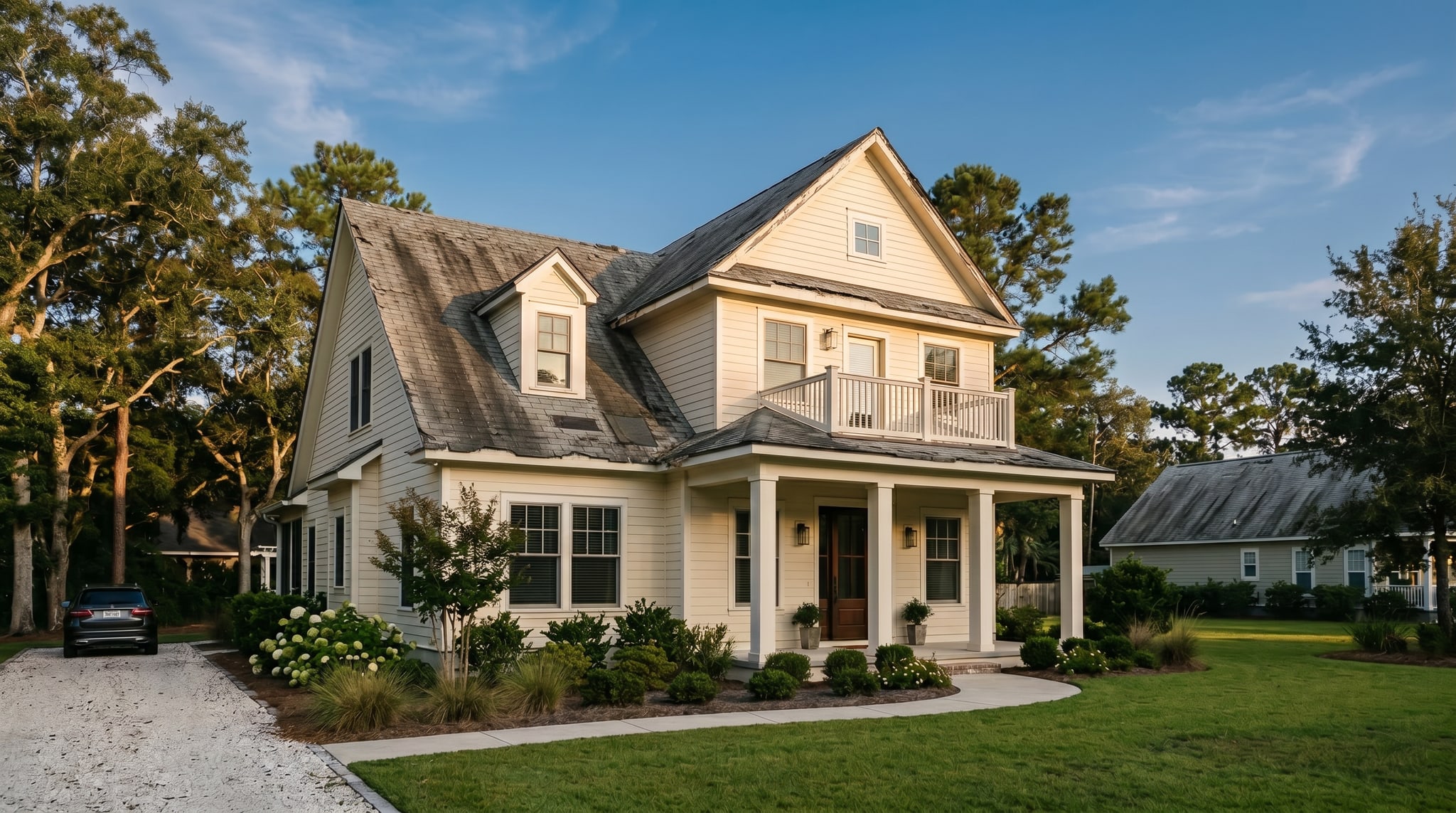
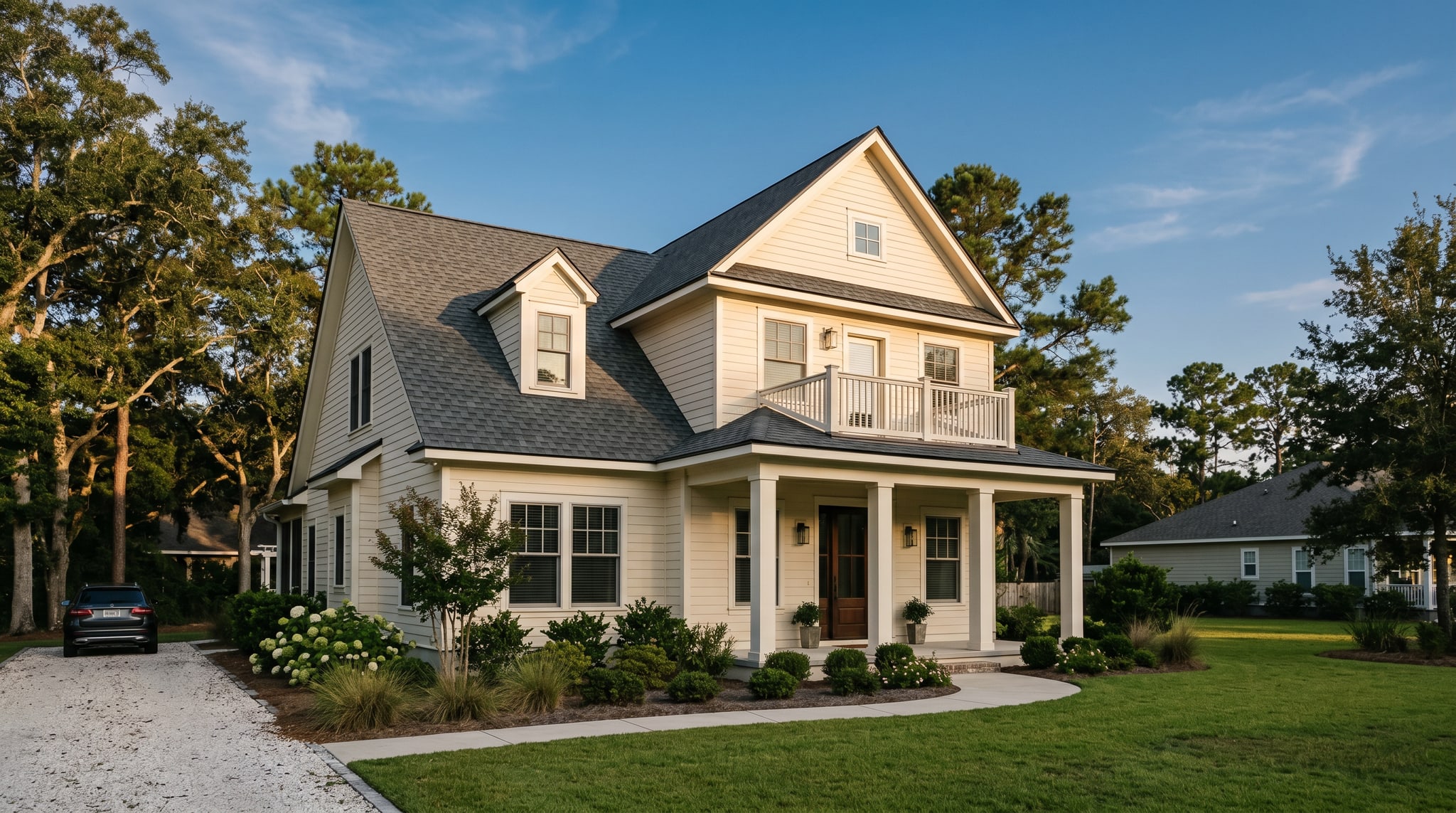
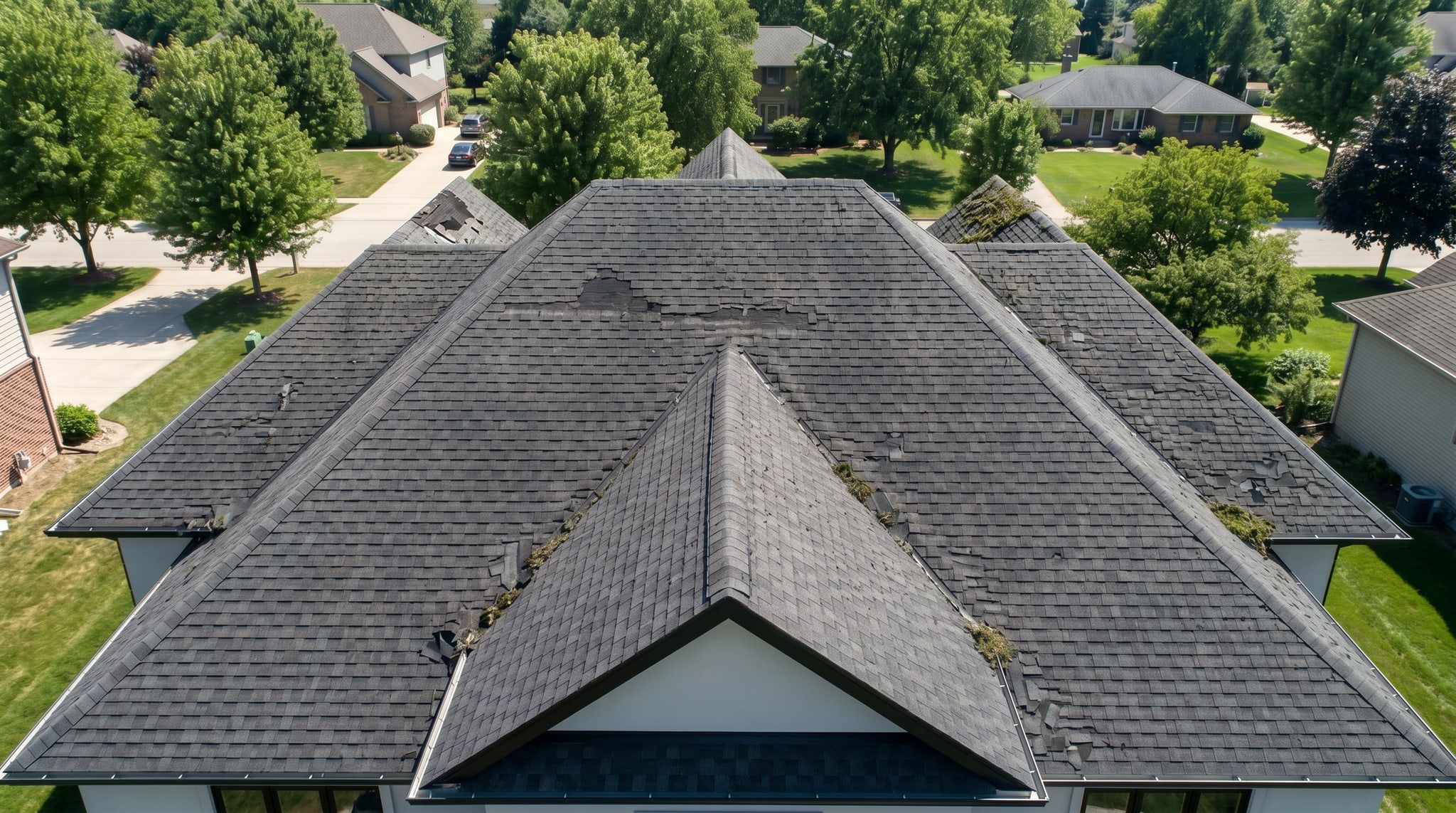
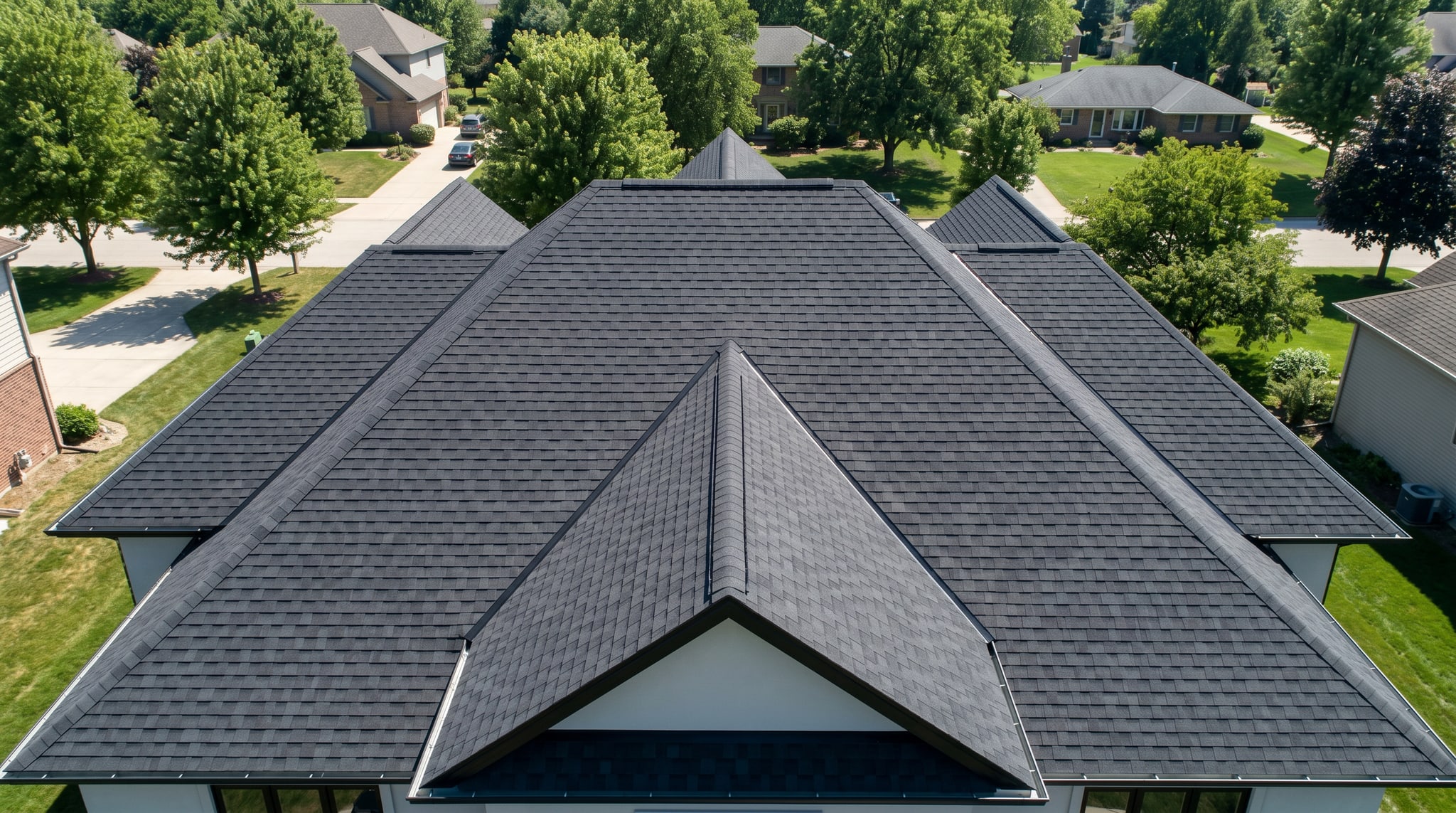
Real replacements, real Gulf Coast homes.
Materials, in depth
What's actually in your new roof system.
A replacement isn't a shingle swap — it's six or seven material decisions stacked on top of each other. Here are the four that matter most on a Gulf Coast home, in plain English. For the full reference, see our roof materials guide.
Shingle vs metal — the system choice
Most Baldwin and Mobile County replacements we do are architectural asphalt — GAF Timberline HDZ, Owens Corning Duration, or CertainTeed Landmark . These deliver 130 mph wind ratings with the high-wind nailing pattern and 30-to-50-year limited warranties . For homes within a mile or two of the water, or homeowners on a 20-plus-year hold, standing-seam metal often makes more financial sense once wind-mitigation discounts and the longer service life are factored in.
Underlayment — synthetic + ice-and-water
Two layers cover the deck before the shingle goes on. Synthetic underlayment runs across the full field of the roof — it's tougher, grippier, and more UV-stable than old felt paper. Ice-and-water shield is self-adhered membrane that wraps the eaves (6 feet up from the gutter), valleys, and every penetration. On the Gulf Coast, where wind drives rain sideways under the shingle, ice-and-water in valleys is what saves the deck.
Ventilation — ridge vent + soffit intake
Attic ventilation is what keeps your shingle warranty valid in Gulf Coast heat. Continuous soffit intake at the eaves plus continuous ridge vent at the peak — balanced and sized to the attic volume — keeps July attic temperatures manageable. Without it, attic temperatures climb above 140°F and bake the shingles from underneath. Skip the ridge vent and you cut years off the roof's life.
Fasteners and flashing — coastal grade
Salt air is hard on metal. We use hot-dipped galvanized or stainless ring-shank nails on every coastal install — they hold uplift better than smooth-shank and don't rust through like cheap fasteners do. Flashing is replaced on every reroof (chimney, sidewall, skylight, pipe boots) — reused flashing on a new roof becomes a leak in three to five years.
Common questions
Questions about roof replacement
- One to two days for most single-family asphalt roofs. Metal and steep pitches take longer. We confirm the schedule before we start.
- We tear off. Roof-overs hide problems and rarely meet manufacturer warranty requirements on the Gulf Coast.
- Yes. Tarps over beds, plywood on AC units and pools, plant covers where needed. We walk the property before and after.
- We replace it at a stated per-sheet rate that you see on the proposal. No surprise bills.
- Yes. It is loud, but the home is safe to occupy. Pets are usually happier with a friend or in a back room.
- Depends on square count, pitch, and material. We give you a written, itemized number after the roof check — never a phone guess.
- Yes, where required by the municipality. We pull and post the permit.
- Architectural asphalt commonly performs 20+ years in coastal AL when installed and ventilated correctly. Metal performs longer.
Related services
Other ways we help.
Roof Installation
New-construction and addition installs built to the architect's plan and Gulf Coast wind code.
Learn moreMetal Roofing
Standing-seam and exposed-fastener metal roofs built for Gulf Coast wind, sun, and salt air.
Learn moreStorm Damage
Gulf Coast wind and hail damage response — tarping, documentation, and full restoration.
Learn moreWhere we work
Serving the Alabama Gulf Coast.
Stapleton, Bay Minette, Loxley, Robertsdale, Foley, Daphne, Spanish Fort, Fairhope, Gulf Shores, Orange Beach, Mobile
Free roof check
Ready for a roof you don't have to think about?
We'll measure the roof, look at the deck, and quote you a number you can trust. No high-pressure pitch. No same-day-only discounts.